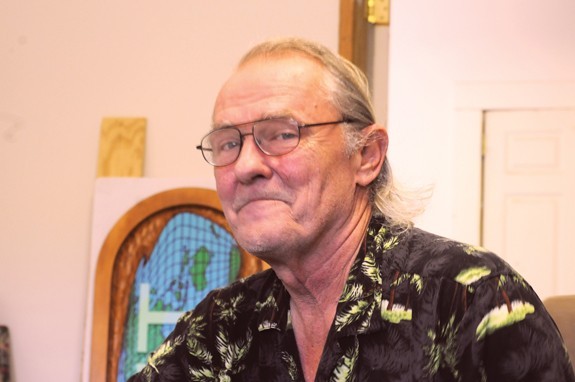
Paul Pantone
Inventor associated with the GEET fuel pretreater
1950–2015
Editorial note: Much of Pantone's early biography comes from his own interviews and supporter histories. This page labels those accounts and does not treat a patent or a demonstration as proof of performance.
The invention record
Pantone described experimenting with fuel preparation during the energy crises of the 1970s and developing an early GEET configuration in the 1980s. Those dates are repeated in his own accounts and later community histories; independent documentation of every milestone is limited.
The strongest primary technical record is US5794601A, filed in 1995 and issued in 1998. It describes an exhaust-heated fuel-pretreater apparatus. Patent issuance establishes that an application met patent-law requirements. It is not an independent certification that the device achieves the inventor's efficiency or emissions claims.
Public plans and community
Pantone and his associates circulated plans and training material, and builders—especially in France—developed variants often called Gillier-Pantone water-doping systems. This created a durable experimental community. Builder reports are useful leads, but their scale and outcomes are difficult to verify and do not replace calibrated, controlled tests.
Legal and institutional history
In 2004 Pantone pleaded guilty in Utah to two counts of second-degree securities fraud. A later competency finding led to confinement at Utah State Hospital, and contemporary reporting places his release in 2009. Pantone and his supporters disputed his treatment and framed the case as suppression. The available court record documents the proceedings but does not establish that GEET's alleged performance caused them.
Read the source-labeled legal history.
Later years and legacy
After his release, Pantone resumed public appearances and advocacy. He died in 2015. His lasting legacy is a patented apparatus, a large informal archive, and an unresolved engineering question: which reported effects survive independent measurement under matched conditions?
The respectful way to examine that legacy is to preserve the record while distinguishing invention, testimony, allegation, and controlled evidence.